
Starlab: Deep Future
The 'Noah’s Ark' of scientific research that launched 1,000 startup
ideas
Lab-concocted vodka, time travel and epilepsy treatments:
Welcome to the Moonshot Factory

|
|
“ a place where 100 years means nothing … ” |
Financial Times | Sifted | 08 08 2022
— What happens
when you round up more than one hundred of some of the
world's greatest scientists, maverick geniuses working on some of
the world’s most groundbreaking ideas, put them together in a
Belgian castle, and let their imaginations run wild?
Fire extinguisher duels, bootleg vodka made with lab-procured ethanol
and worldbeating treatments for epilepsy are just some of what went
down at
Starlab
: a one-of-a-kind experiment created to unite
some of the world’s most daring technologists.
When it was founded in 1996, Starlab was compared to other top
research institutes — like Xerox’s Palo Alto Research Center — that
successfully bridged the gap between idea and market. It was also a
prototype for the ambitious organizations of today like Google’s
“moonshot factory,”
X
, trying to bring entirely new ideas to
the world.
But the centre’s idealism was to be its downfall; its pie-in-the-sky
approach couldn’t pay the bills, and it went dramatically bankrupt
during the dotcom crash. But what most people don’t know is that
Starlab’s legacy lives on in the picturesque hills overlooking
Barcelona and elsewhere.
Many European VCs and universities claim they’re backing innovations
that will solve humanity’s problems, but huge successes have been
elusive. One of the companies from Starlab’s second generation has
found significant success, but the centre's tale forces anyone
interested in innovation to ask themselves: how do we really bring the
wildest ideas to life — and make them financially viable?
The Noah’s Ark of science

|
|
Christopher Altman
|
“De Brouwer’s ambition was to bring the best scientists in the world together to ‘ think thoughts for the very first time. ’ It was very interdisciplinary — no walls, no boundaries, no borders …” says Christopher Altman — astronaut, quantum physicist and Starlab veteran.
In its heyday,
Starlab
was home to more than 130 scientists
from 36 countries, who worked on ideas ranging from time travel and
consciousness to new media and “intelligent” clothing. The majority
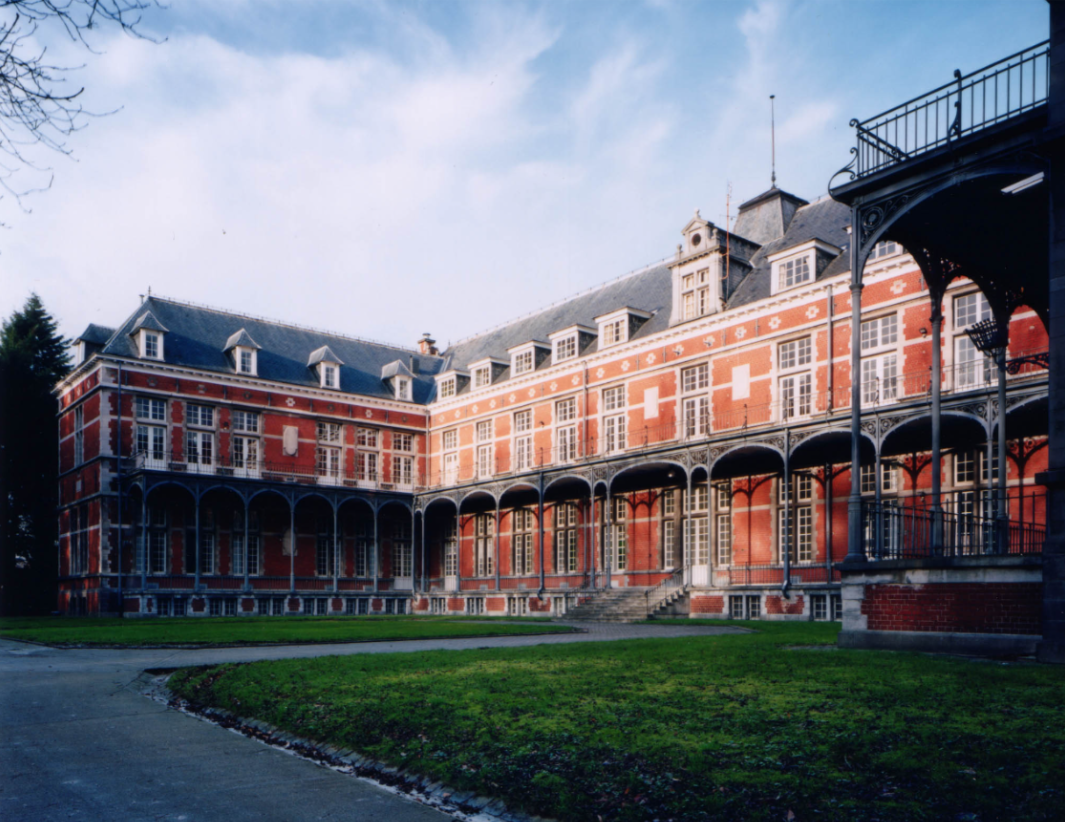
lived on site: a neoclassical castle designed in the late 1800s on the
outskirts of Brussels.

|
|
Starlab “Time Travel Party,” May 2001.
(
L
to
R
):
Hugo de Garis,
Serguei Krasnikov, Roman Zapatrin, Christopher Altman |
“It was like a pirate ship in a way, which is what I think I fell in
love with. Or you could call it a kind of sect,” laughs Giulio Rufini,
neuroscientist and current CEO at
Starlab
.
“We’d stay up all night talking in-depth theoretical implications of
closed timelike curves (
time travel
).
Roman had a centuries-old recipe for homemade vodka and put to use
some surplus ethanol he reappropriated from the biophysics lab down in
the basement,” says Altman, referring to one of his colleagues, a
quantum topologist and mathematician.
“One time a few of the researchers covered themselves in yards of
aluminium foil as “
armor”
and started a duel, complete
with fire extinguishers as weapons,
in the courtyard.”
Running aground in the dotcom VC drought
But how did Starlab plan to commercialize these wild
ideas?
Starlab’s research was loosely divided across four main areas: Bits,
Atoms, Neurons and Genes.
The acronym
(BANG
)
was later adopted by MIT Media Lab.
“
They borrowed that from
Starlab
a few years after the fact,”
recalled Altman.
Alongside the team of swashbuckling scientists working across these
disciplines,
Starlab
also employed a commercial team who were
tasked with trying to monetize the research.
One of them was Ana Maiques, who’d recently married Rufini before they decided to both join the project. “At the time they were developing “iWear,” intelligent clothing with integrated sensors. We'd reach out to Levi's and all these companies and say, ‘Put €100k on the table per year, and you have access to the IP that is being generated.’”
“
In some cases it was successful, but it was hard to replicate in
others.
”
Where the lab was intended to be distinct from university or
academia, commercial deals like these weren’t enough to sustain it.
Maiques remembers how Starlab reflected the heady optimism that was
common in the early days of the internet age, as VC capital was pumped
into the institute with no urgency on getting a return on
investment.
“They would say ‘100 years means nothing at Starlab’. Well, for 100
years to mean nothing you need to be full of capital to develop those
technologies,” she says. “The problem was that the
dotcom
bubble crash happened, and they couldn’t secure the next
round. It happened overnight … one day we were eating lobster, and the
next they came to close the company.”
Altman says that when one key Swiss investor pulled their backing out
of Starlab, the team began approaching people like Bill Gates — Altman
himself even went to George W. Bush in person, approaching him at his
hotel on his first visit to NATO in an effort to save the lab.
Enthusiasm was abundant, but government grant timing was prohibitive,
so all the effort was for naught.
“It was kind of a bummer, having set up all this stuff,” Rufini says
wryly.
Rebirth in Barcelona
But Maiques, the more entrepreneurially minded of the recently
married couple, wasn’t about to give up on Starlab.
“Ana’s always had more of a business head than me, and she said,
‘Let’s just buy this and run it ourselves,’” says Rufini.
Rufini and Maiques had already been working on setting up a Spanish
chapter of Starlab, and had recruited 15 scientists to begin work at
the Fabra Observatory, perched in the hills overlooking Barcelona. The
team had already secured research contracts with the European Space
Agency but, in absence of funding from the central operation, had to
dramatically scale back ambitions.
 “We had to take radical action, we had to lose about half of the
people unfortunately,” says Rufini. “It was the crossing of the
desert and it was dealing with a different type of Starlab
reality.”
This new reality also meant radically narrowing the scope of
research. 130 scientists working across BANG were reduced to six
scientists working on two core areas: space and
neuroscience.
“We had to take radical action, we had to lose about half of the
people unfortunately,” says Rufini. “It was the crossing of the
desert and it was dealing with a different type of Starlab
reality.”
This new reality also meant radically narrowing the scope of
research. 130 scientists working across BANG were reduced to six
scientists working on two core areas: space and
neuroscience.

It was here that Starlab began building the foundations of what would become Neuroelectrics, a non-invasive neural interface startup that raised $17.5m in 2021 to fund a Phase III trial for epilepsy treatment.
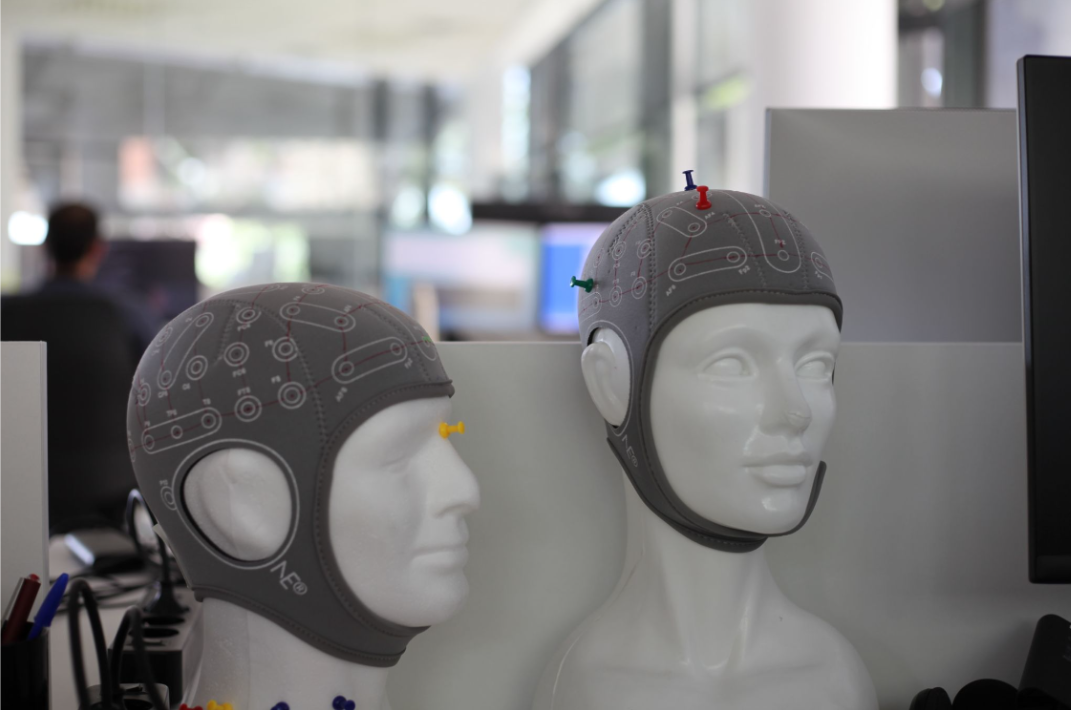
Apart from relying on grant funding, Maiques describes how she would go door-to-door at research companies, selling early iterations of the Starstim headcap, as well as data processing services.
“We needed to run payroll. That's why I was going out and knocking on
doors and trying to sell to companies out there, which is something
that the research field never does — that kind of commercial action,”
she says.
'You’ve got to let the broth boil'
Neuroelectrics was able to self-sustain for 10 years with this
bootstrapping strategy, and the company now helps finance Starlab’s
research.
But some of the spinout attempts haven’t been such a hit. Another
commercial product Starlab launched is a satellite observation company
called Greendex, which analyses the amount of vegetation surrounding
real estate to assess air quality in different neighborhoods.
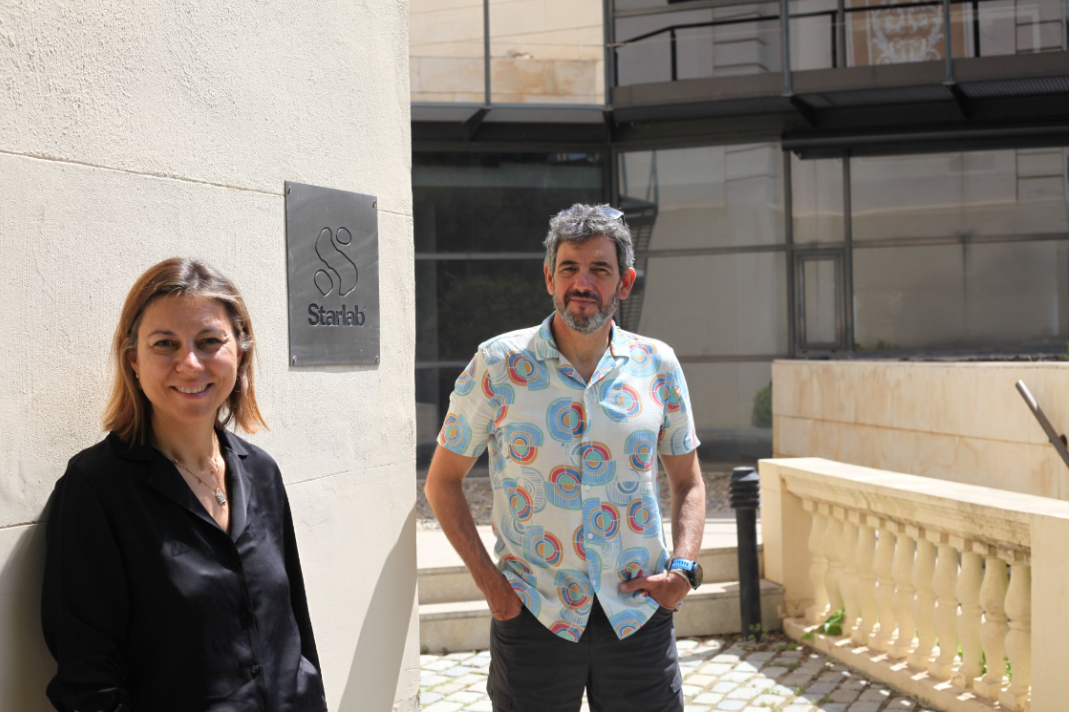
“Spinouts are not easy. You need to have the technology, but the timing also has to align with the market.”Maiques says that, today, the space and satellite observation side of Starlab’s research has taken a back seat, with more energy going into neuroscience.
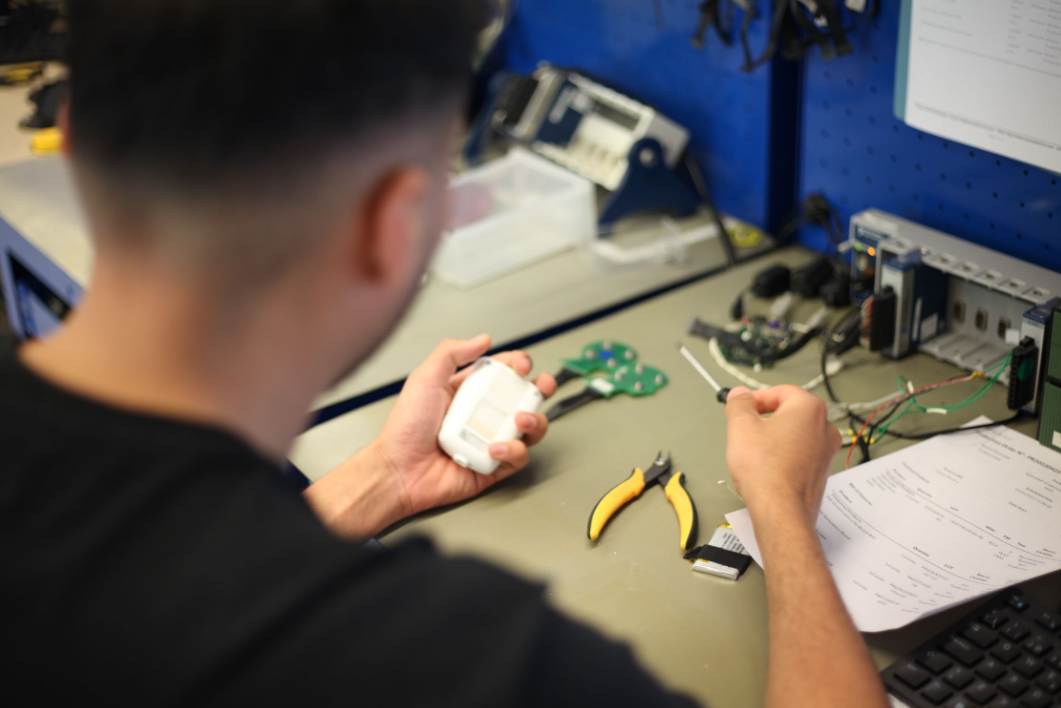
Rufini and his team are now working on a project called “neuro
twins” — which aims to use various data
sources like MRI and EEG scans to build a digital model of
people’s brains to identify how and why things might be going
wrong across different pathologies.
Making science useful
The “iWear” smart clothing project was eventually sold to Phillips, while another biotech company, Bioprocessors, was spun out and relocated to Silicon Valley. Rufini adds that a whole host of ideas that are now commonplace were born at Starlab. “I came up with the idea that, pretty soon, cars will have the internet and we could use that information to forecast traffic,” he says.
“There was another one called ‘spitters.com’, where you could
send off spit samples to your genotype. There was another one called
‘pajamanation.com’, which was a marketplace for jobs for people
working from home.”
Deep Future

Some argue that Starlab’s greatest legacy isn’t in the scientific advances or spinoff businesses that it created, but in the way it encouraged those who walked through its doors to think in a truly unique way.

“There are paradigm shifting technologies to be discovered if we can
get to the bottom of the phenomenon,” he says. “Confirmation of
extraterrestrial technological artifacts would quite readily qualify as the single
greatest discovery made by the human race and transform our place in the universe.”
Maiques adds that no less than
eight
former researchers at
Starlab Barcelona have gone on to start their own companies, in fields
ranging from virtual reality to earth observation radar. This
entrepreneurial spirit, she believes, is something that’s baked into
Starlab’s business model, and something that she says is sorely
lacking in European academia.
“In Europe we are good at turning money into knowledge, but we're
really bad at turning knowledge back into money,” she says. “I
honestly cannot think of a private company doing science in such a way
with this model to create spinoffs. We always had the drive to go to
the market and make money. It's just a different vibe.”
Starlab’s director of neuroscience, Aureli Soria-Frisch, agrees that
European science all too often gets stuck in the lab.
“There is a lot of very interesting science in Europe. But how can we
make this useful for people? We need better licensing policies and
career development support outside of academia,” he says.
In that sense, Starlab’s story serves as a microcosm for this big
question in European tech: how can we make the most of the continent’s
scientific innovation?
The project’s first chapter serves as a warning for what can happen
when venture capital flows into ideas without a viable business model.
Its second chapter is a lesson in how great research can be done with
the market in mind, given the right conditions. Europe, so far, just
hasn’t excelled in creating those conditions.
Source : Sifted and The Financial Times

ASTRONAUTICS・BREAKTHROUGH PHYSICS
RETROCAUSALITY・QUANTUM TECHNOLOGY
No comments:
Post a Comment