20050826

Quantum Interferometric Sensors LSU Quantum entanglement garners a number of advantages to metrology and remote sensing applications. Dowling, Kapale et al. have issued a recent summary of progress in quantum interferometric sensors, which harness quantum entanglement for improved measurement sensitivity approaching the Heisenberg limit.

Phase-Slip Flux Qubits TU Delft In a recent paper submitted to the New Journal of Physics special issue on solid-state quantum information processing, Mooij and Harmans introduce phase-slip flux qubits, which harness quantum tunnelling to realize a superconducting qubit without the use of Josephson junctions. Phase-slip qubits potentially hold two distinct advantages over traditional flux qubits: lower sensitivity to charge noise-based sources of decoherence, and well-defined separation of energy levels of more than 500 GHz, allowing for extremely rapid excitation of the qubit.


Energy Level Separation Energy levels as a function of applied flux for different fluxoid numbers. A phase-slip event changes the fluxoid number n. The arrow indicates the operating point at f= ½.

Macroscopic EPR Pairs in Superconducting Circuits RIKEN In quant-ph/0508027, Nori et al. propose an efficient approach for deterministic generation of entangled EPR pairs in coupled Josephson nanocicruits. Realization of the experiment would provide an effective means of testing Bell inequality violations, demonstrating nonlocality of quantum entanglement in macroscopic systems.

20050808

Delft Scientists Split Electron Pairs in Superconductors TU Delft "Scientists at Stichting FOM and Kavli Institute of Nanoscience Delft have demonstrated that electrons that normally travel through superconductors in pairs can be seperated while retaining their quantum mechanical kinship. The formation of electron pairs - so-called Cooper pairs - is such a fundamental property of current flow in superconductors that the Delft experiment is considered a breakthrough. It lays the foundation for the realization of a superconducting entangler capable of injecting pairs of entangled electrons into nanoelectronic circuits, an important building block of the quantum computer scientists have been dreaming of for years."

20050804

Robust Entanglement Innsbruck "It is common belief among physicists that entangled states of quantum systems lose their coherence rather quickly. The reason is that any interaction with the environment which distinguishes between the entangled sub-systems collapses the quantum state. Here we investigate entangled states of two trapped Ca+ ions and observe robust entanglement lasting for more than 20 seconds."

20050720

Restoring Quantum Coherence Pavia, Italy Decoherence remains the foremost limiting factor on practical implementation of quantum information technologies. In quant-ph 0504195, Buscemi et al. show that for qubit and qutrit systems it is always possible to recover quantum coherence by performing controlled measurements upon the environment, and that the minimal information required to invert qubit decoherence is equivalent to the von Neumann entropy exchange of the system.

Measuring Decoherence in a three-level rf SQUID Qubit U Kansas In cond-mat 0507008, Han et al. perform direct and quantitative measurements of dissipation-induced relaxation in a three-level rf SQUID qubit. "Analysis of the system indicates that the dominant sources of qubit dissipation are the flux bias and magnetometer readout circuits. Since this kind of dissipation-induced qubit decoherence can be greatly suppressed with more sophisticated designs we believe it does not impose a fundamental limit to this type of qubit [...] We are developing advanced designs for qubit bias and readout circuits that are predicted to decrease their contributions to the qubit damping by several orders of magnitude."

20050712

Josephson Bifurcation Amplifier for Quantum Measurements Yale In cond-mat 0507248, Devoret et al. construct a new type of amplifier for superconducting qubit readout based on the transition of an rf driven Josephson junction between two distinct oscillation states near a dynamic bifurcation point: "The main advantages of this new amplifier are speed, high-sensitivity, low back-action, and the absence of on-chip dissipation. Using pulsed microwave techniques, we demonstrate bifurcation amplification in nanofabricated Al junctions and verify that the performance predicted by theory is attained."

Flux-Qubit Readout with Frequency Dependent Damping Berkeley, München "Recent experiments on superconducting flux qubits, consisting of a superconducting loop interrupted by Josephson junctions, have demonstrated quantum coherence between two different quantum states. The state of the qubit is measured with a superconducting quantum interference device. Such measurements require the SQUID to have high resolution while exerting minimal backaction on the qubit." In Phys. Rev. B 72, 024513 , Plourde, Wilhelm et al. employ a path-integral approach to analyze the Caldeira-Leggett model, calculating backaction of a shunted symmetric SQUID on a flux qubit. "To test the model, we fabricated a dc SQUID in which each junction is shunted with a thin-film interdigitated capacitor in series with a resistor, and measured the switching distribution as a function of temperature and applied magnetic flux. After accounting for the damping due to the SQUID leads, we found good agreement between the measured escape rates and the predictions of our model. "

20050628

arXiv Notables quant-ph Notable submissions to the arXiv this month include a comprehensive overview of solid-state qubits by Esteve and Vion [0505676], two papers by Nori et al. on macroscopic cat states [0506011] and testing Bell inequalities in Josephson qubits [0408089], Wilhelm and Kack present an efficient readout scheme for flux qubits at the degeneracy point [0505537], Greenberger and Svozil derive a quantum information theoretic analysis of time travel [0506027], Wiesniak, Vedral and Brukner on macroscopic entanglement measures [0503037], Brassard et al. on quantum game theory and pseudo-telepathy [0408052], and a novel quantum storage and information transfer method in superconducting qubits by Wang et al. [0506144].

20050527

Quantum-Classical Interface Sussex, Liverpool In cond-mat/0505390, Mark Everitt et al. explore nonlinear interaction of a quantum mechanical SQUID ring with its environment. Potential applications include large frequency ratio down-conversion between electromagnetic fields, such as in classical THz communications technologies. "With the now very serious interest being taken in the possibilities of creating quantum technologies such as quantum information processing and quantum computing, much attention is being focused on the application of Josephson effect devices, particularly the SQUID ring. The highly non-perturbative nature of the SQUID ring in the quantum regime means that the ring-environment interaction can be very non-linear, and may lead to unexpected results ..."

Entanglement Extraction from a Solid NEST-INFM, Leeds, Vienna quant-ph/0505107 "It has been a common belief that entanglement cannot exist on a macroscopic scale. This is because decoherence effects from many-particle interaction would destroy all quantum correlations. However, it has been predicted that macroscopic entanglement can exist in solids in the thermodynamical limit – even at high temperature – and it is related to critical phenomena. Here we propose an experimental setup to demonstrate entanglement extraction with present-day technology using optical lattices. This demonstrates that entanglement not only exists in solids, but can even be used for quantum information processing or to violate Bell’s inequalities ..."

20050520

An n-qubit controlled phase gate with resonator-coupled SQUIDs U Kansas In quant-ph/0504188, Siyuan Han and Chui-Ping Yang propose a novel method to realize multiqubit controlled phase gates with SQUIDs. The scheme "operates essentially by exchanging a single photon between the controlled SQUIDs and the resonator mode before and after a phase shift performed on the target SQUID."

Transport of atoms in a quantum conveyor belt NIST Gaithersburg cond-mat/0504606 "An atomic-gas Bose-Einstein condensate (BEC) is a coherent source of matter waves – a collection of atoms, all in the same state, with an extremely narrow momentum spread ... We can easily control the velocity and acceleration of the atomic lattice structure as well as its strength, making it a variable 'quantum conveyor belt.' This allows us to explore situations that are difficult or impossible to achieve in solid state systems. The results are often remarkable and counterintuitive."

Signatures of quantum behavior in single-qubit weak measurements Penn State, UC Riverside quant-ph/0505094 "With the recent surge of interest in quantum computation, it has become very important to develop clear experimental tests for 'quantum behavior' in a system. This issue has been addressed in the past in the form of the inequalities due to Bell and those due to Leggett and Garg. These inequalities concern the results of ideal projective measurements, however, which are experimentally difficult to perform in many proposed qubit designs ... Here, we show that weak continuous measurements, which are often practical to implement experimentally, can yield particularly clear signatures of quantum coherence ..."

20050506

Full Protection of Superconducting Qubit Systems from Coupling Errors Munchen, Berkeley quant-ph/0407780 "Solid state qubits realized in superconducting circuits are potentially extremely scalable. However, strong decoherence may be transferred to the qubits by various elements of the circuits that couple individual qubits [...] We propose here an encoding that provides full protection against errors originating from these coupling elements ..."

Asymmetry and Decoherence in a Double-layer Persistent-current Qubit Kavli Institute Delft cond-mat/0405272 "We discuss a superconducting flux qubit design that exploits the symmetries of a circuit to protect the qubit from unwanted coupling to the noisy environment [...] Possibilities for prolonging the relaxation and decoherence times of the studied superconducting qubit are proposed on the basis of the obtained results."

20050424

Detection of Macroscopic Entanglement by Correlation of Local Observables University of Tokyo In quant-ph 0504086, Shimizu and Morimae propose a macroscopic entanglement index for unknown and mixed states. "We propose a correlation of local observables on many sites in macroscopic quantum systems. By measuring the correlation one can detect, if any, 'superposition of macroscopically distinct states,' which we call macroscopic entanglement, in arbitrary quantum states that are (effectively) homogeneous. Using this property, we also propose an index of macroscopic entanglement."

20050415

Spectroscopy on Two Coupled Superconducting Flux Qubits Kavli Institute Delft In PRL 94, 090501 (2005) Mooij et al. report on spectroscopy measurements of two coupled superconducting flux qubits: "The new results support the notion that superconducting flux qubits can be used to study entanglement in macroscopic quantum systems and for the development of nontrivial two-qubit gates [...] We demonstrate that two macroscopic flux qubits can be coupled to form a quantum mechanical four level system."


2005 Agilent Europhysics Prize Agilent Technologies The 2005 Agilent Technologies Europhysics Prize has been awarded to Awschalom, Dietl, and Ohno for their investigation of solid-state magnetic semiconductors and spin coherence. Spintronics is a promising candidate for scalable quantum computation. "We are proud to recognize these scientists for combining advanced materials engineering, insightful theoretical modeling, ingenious experimental techniques, and international collaboration to attain important breakthroughs in spintronics," said Jim Hollenhorst, director of molecular technology at Agilent Laboratories. Last year the award was shared by Mooij, Nakamura, Devoret and Esteve for their demonstration of superconducting circuits as qubits.

20050408

Nonlocal Measurements in Time-Symmetric Quantum Mechanics arXiv Vaidman and Nevo have posted a preprint on nonlocal demolition measurement of backward evolving quantum states which allows for the introduction of novel types of nonlocal variables. The work builds upon upon Aharonov's time-symmetric formalism, which contains the quantum state evolving backward in time from complete measurement performed in the future relative to the time in question. "Demolition measurements of nonlocal backward evolving quantum states require remarkably small resources. This is so because the combined operation of time reversal and teleportation of a local backward evolving quantum state requires only a single quantum channel and no transmission of classical information."

20050401

Quantum Interference Effect Transistors PhysicsWeb Cardamone et al. propose a novel approach to single-molecule transistors, the quantum interference effect transistor, or QuIET. Each transistor consists of two electrodes attached to an organic ring molecule in one of two configurations: the presence or absence of quantum interference in the ring determines the state of the transistor. "One potential advantage of the QuIET approach is that it could work in aqueous environments, such as those inside living organisms, because it is made of organic molecules."


Schematic diagrams of two types of QuIET In each, base voltage modulates the coherent suppression of current between emitter (E) and collector (C) leads. In (a), base voltage controls the distance x between the benzene ring and base lead (B), for example an STM tip. This in turn controls the coupling of the ring to the base lead. In (b), a base complex is introduced between the ring and base lead. The electrostatic effect of the base lead's bias on this molecule alters its coupling to the benzene ring.


Quantum Game Theory arXiv Nash equilibria and game theory profoundly affected the outcome of the 20th Century – preventing escalation of Cold War conflict between the US and USSR, for example. Quantum game theoretic approaches similarly hold the potential to influence strategic developments in the coming century. Quantum communications networks are already operating in research laboratories across the globe. With the recent birth of the DARPA/BBN quantum internet, quantum game theory has left the realm of academia and entered the world of practical applications, showing promise to transform politics, economics, conflict and warfare in the decades to come. In a recent PhD thesis, Iqbal reviews the current state of the field. See also "Quantum Pseudo-Telepathy" by Brassard et al, "Classical Rules in Quantum Games" by van Enk, "Quantum Strategies" by Meyer.

20050330

Vision 2033

American Association for the Advancement of Science Science, technology and public policy planning for the next thirty years - PDF downloads of the proceedings

20050325

Interference in Bose-Einstein Condensates Science Javanainen comments on nondestructive measurement of relative phase difference between two separated BECs, recently conducted by Saba et al. within the Ketterle Group at MIT's Center for Ultra-Cold Atoms: "The experiments open up new ways to manipulate condensates, which are macroscopic objects, as if they were quantum mechanical entities. Measurement devices based on matter-wave interferometry are a potential application."

Quantum Interference in Time arXiv Paulus has posted a preprint of the recent temporal quantum interference experiments, widely reported earlier this month: "The conceptually most important interference experiment is the double-slit scheme, which has played a pivotal role in the development of optics and quantum mechanics. [...] We have realized an intriguing implementation of the double slit in the time domain. The observation of interference and its absence at the same time for the same electron is a beautiful demonstration of the principles of quantum mechanics."

Gaidarzhy Defends Quantized Displacement arXiv In cond-mat 0503502, Gaidarzhy et al. reply to Schwab's critical comments on the Mohanty Group's recently-reported experimental evidence of macroscopic quantum displacement in a nanomechanical oscillator: "In summary, both the objections and the premise of the comment, on the data interpretation, by Schwab et al. are not valid [...] A proper theoretical framework to understand quantized motion of a macroscopic mechanical system of 50 billion atoms, in presence of decoherence and dissipation, is yet to be developed."

20050318

Measurement Based Quantum Computation Vienna In Nature 434, Walther et al. report on the first experimental demonstration of Grover's search via one-way quantum computing on entangled photons. Following initialization of a highly-entangled 'cluster state,' irreversible single-qubit measurements are performed in a feedforward process that determines the output of the system. Raussendorf and Briegel's original paper is available via quant-ph 0010033.

AIST Quantum Cryptography Research Tokyo ATIP QUIST reports that AIST, the Japanese National Institute of Advanced Industrial Science and Technology, is establishing a national research center in quantum cryptography and communications this spring under direction of Hideki Imai, University of Tokyo. "Hiroyuki Yoshikawa, Director of AIST, is aiming to establish world-class technology which will contribute to establishing global standards for cryptography technology and procedures for its evaluation."

20050311

Macromolecular Quantum Interference Vienna Arndt, Hornberger and Zeilinger provide a summary of recent progress in matter-wave interferometry, outlining near-term experimental objectives as well as theoretical developments towards understanding the mechanisms of decoherence. "In our view, matter-wave interferometry should be feasible for large objects such as proteins, small viruses and nanocrystals with atomic masses of up to 10^6 units. Extrapolating our results to bigger masses and higher temperatures, we believe that neither collisions nor thermal decoherence will be a problem in these cases. No fundamental limit of quantum interference is yet in sight, but much work still has to be done to prepare and manipulate coherent beams of supermassive particles. Carrying out such experiments will be a fascinating challenge."

DARPA Quantum Network Harvard/Boston/BBN Chip Elliot reports on the current status of the DARPA Quantum Network, in continuous operation since June 2004. "The DARPA Quantum Network is the world's first quantum cryptography network, and perhaps also the first QKD system providing continuous operation across a metropolitan area. Four more nodes are now being added to bring the total to 10 QKD nodes." This paper updates quant-ph 0412029 for the upcoming SPIE conference.

20050304

Quantum Interference in Time PhysicsWeb, Slashdot Paulus and colleagues have conducted a novel version of the double slit experiment, observing interference fringes with electrons passing through a double slit in time. Separated by femtosecond laser pulses, the 'slit' is composed of two maxima and one minima of the electric field. Slashdot notes several related articles on Zeilinger's interference experiments with fullerenes and biomolecules; see also the "delayed-choice quantum eraser" experiment by Shih and Kim.

Schwab comments on Phys. Rev. Lett. 94, 030402 (2005) arXiv In reply to the recent Gaidarzhy et al. report on "Evidence for Quantized Displacement in Macroscopic Nanomechanical Oscillators," Schwab et al. contend that the Letter contains order-of-magnitude omissions and inaccuracies counter to any interpretation of quantized macroscopic displacement: " ... the evidence, analysis, claims, and conclusions presented are contrary to expectations from fundamentals of quantum mechanics and elasticity theory, and [...] the method used by the authors is unsuitable in principle to observe the quantized energy states of a nanomechanical structure."

20050225

Simultaneous State Measurement of Coupled Josephson Phase Qubits NIST, UCSB In Science [25 Feb 2005], McDermott et al. report on simultaneous precision measurement of antiphase oscillation between flux qubits, consistent with entanglement of the two qubit states. "One of the many challenges of building a scalable quantum computer is single-shot measurement of all the quantum bits. Here, we exploit the simultaneous single-shot measurement of two coupled Josephson phase qubits to directly probe interaction of the qubits in the time domain [...] thereby opening the possibility for the full characterization of multi-qubit gates and elementary quantum algorithms."

20050218

Quantum Leap canada.com A brief overview of the history and development of quantum cryptography, from its origins through a chance encounter between Charles Bennett and Giles Brassard while swimming in the warm tropical waters of the Caribbean, to the next-generation satellite-based quantum encryption links of tomorrow. "Together, Brassard and Bennett would go on to found a field of science - quantum information processing - whose effects on society some say could even rival the impact that the steam engine had in its time."

20050210

Schrodinger's Kittens Mohanty Group In Physical Review Letters [ 28 Jan 2005 ], the Mohanty Group at Boston University reports evidence of [center-of-mass displacement] quantum nanomechanical oscillations in silicon antennae of ~ 50 billion atoms, making this the largest observation of quantum mechanical behavior to date. "It's a truly macroscopic quantum system," says Alexei Gaidarzhy, the paper's lead author and a graduate student in the BU College of Engineering's Department of Aerospace and Mechanical Engineering. "When it's a new phenomenon, it's best not to be guided by expectations based on conventional wisdom. The philosophy here is to let the data speak for itself."

Mainstreaming Quantum Crypto? MagiQ/Cavium MagiQ Technologies has signed a deal with Cavium Networks to boost performance and lower costs through standardized engineering protocols, incorporating Cavium's network security chips into MagiQ's servers and creating designs for networking boards. Will quantum encryption go mainstream?

20050208

Coupling Flux Qubits You, Nakamura, and Nori "A central problem for implementing efficient quantum computing is how to realize fast operations, both one- and two-bit ones. However, this is difficult to achieve for a collection of qubits, especially for those separated far away, because the interbit coupling is usually much weaker than the intrabit coupling. Here we present an experimentally feasible method to effectively couple two flux qubits via a common inductance and treat both single and coupled flux qubits with more realistic models which include the loop inductance. The main advantage of our proposal is that a strong interbit coupling can be achieved using a small inductance, so that two-bit operations as fast as one-bit ones can be easily realized. We also show the flux dependence of the transitions between states for the coupled flux qubits." [ arXiv ]

20050203

Interpretation of Quantum Mechanics: Current Status and Future Directions Perimeter Institute Lecture Series A technical but pedagogical introduction to the problems associated with developing a consistent understanding of the nature of objective reality in light of quantum theory.

20050131

New Life for Schrodinger's Cat The observation of quantum superpositions of distinct macroscopic states by groups at Stony Brook and Delft represents a milestone in experimental quantum physics. Both teams have reported spectroscopic evidence for currents of microamps flowing through a superconducting ring in opposite directions at the same time. Physics World article by Tony Leggett.

Superconducting Quantum Bits Quantum Transport Group Superconducting devices can be used to explore the boundaries between the quantum and classical worlds, and hold potential applications in quantum information. Physics World article by Hans Mooij.

20050107

UNESCO Physics for Tomorrow The launch conference for the International Year of Physics was held at UNESCO Headquarters in Paris, 13-15 Jan 2005. I've recently posted a summary and photos from the event.

RSA INFOSEC Awards My briefing to the UNISCA First Committee, "Converging Technologies: The Future of the Global Information Society," was selected to receive the 2004 RSA Information Security Award for Outstanding Achievement in Government Policy. RSA Awards summaries are available online via RSA Conference website, press release and news links.

20041201

Adaptive Quantum Networks quantum topology » neural networks [IJTP] Our paper on adaptive quantum networks appears in this month's International Journal of Theoretical Physics. We introduce a novel model of superposed adaptive quantum networks, with considerations for high-dimensional dissipative quantum systems in both quantum computation and molecular biology. A preprint of the article is available via quant-ph 0311016.

20041125

Quantum networks, quantum registers and developments in quantum computing Future Salon News summaries of recent developments in quantum information science and technology.

20041121

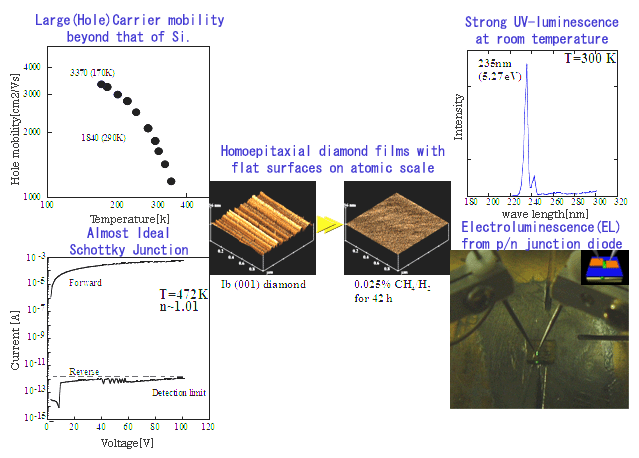
Room-temperature Bose-Einstein condensation?

Hideyo OKUSHI, AIST Tsukuba Diamond Research Center, Japan The AIST Tsukuba Diamond Research Center has observed extremely sharp 235-nm exciton emission in fabricated single-crystal diamond film semiconductors at 300K. If the exciton lifetimes are long enough it is possible that Bose-Einstein condensation can occur in these diamond films, even at room temperature.

20041026

Transfer of Nonclassical Properties from Microscopic Superpositions to Macroscopic Thermal States H. Jeong ,T.C. Ralph

Abstract quant-ph 0410210 "We have studied a more reasonable analogy of Schrodinger’s cat paradox where the virtual cat is a significantly mixed thermal state. Our discussion was motivated by the observation that a truly classical system cannot be in a pure quantum state. We have found that non-classical properties of microscopic quantum superpositions can be transferred to thermal states of large average photon numbers. The resulting states show strong quantum coherence and entanglement between severely mixed thermal states. Our examples are feasible in real physical systems and may be realized for some moderate cases using current technology. Finally, it will be an interesting future work to explore the possibility of quantum information processing using the thermal-state “superpositions” and entanglement studied in this paper."

20041024

A Quantum Perceptron M. Andrecut and M. K. Ali, Department of Physics, University of Lethbridge, Canada "The task of a classical perceptron is to classify two classes of patterns by generating a separation hyperplane. Here, we give a complete description of a quantum perceptron. The quantum algorithms for classification and learning are formulated in terms of unitary quantum gates operators. In the quantum case, the concept of separable or non-separable classes is irrelevant because the quantum perceptron can learn a superposition of patterns which are not separable by a hyperplane." - mircea.andrecut@uleth.ca

20041018

"Brain" in a dish acts as autopilot, living computer

Oct. 21, 2004 GAINESVILLE, Fla. --- A University of Florida scientist has grown a living “brain” that can fly a simulated plane, giving scientists a novel way to observe how brain cells function as a network.

The “brain” -- a collection of 25,000 living neurons, or nerve cells, taken from a rat’s brain and cultured inside a glass dish -- gives scientists a unique real-time window into the brain at the cellular level. By watching the brain cells interact, scientists hope to understand what causes neural disorders such as epilepsy and to determine noninvasive ways to intervene.

As living computers, they may someday be used to fly small unmanned airplanes or handle tasks that are dangerous for humans, such as search-and-rescue missions or bomb damage assessments.

“We’re interested in studying how brains compute,” said Thomas DeMarse, the UF professor of biomedical engineering who designed the study. “If you think about your brain, and learning and the memory process, I can ask you questions about when you were 5 years old and you can retrieve information. That’s a tremendous capacity for memory. In fact, you perform fairly simple tasks that you would think a computer would easily be able to accomplish, but in fact it can’t.”

While computers are very fast at processing some kinds of information, they can’t approach the flexibility of the human brain, DeMarse said. In particular, brains can easily make certain kinds of computations – such as recognizing an unfamiliar piece of furniture as a table or a lamp – that are very difficult to program into today’s computers.

“If we can extract the rules of how these neural networks are doing computations like pattern recognition, we can apply that to create novel computing systems,” he said.

DeMarse experimental "brain" interacts with an F-22 fighter jet flight simulator through a specially designed plate called a multi-electrode array and a common desktop computer.

“It’s essentially a dish with 60 electrodes arranged in a grid at the bottom,” DeMarse said. “Over that we put the living cortical neurons from rats, which rapidly begin to reconnect themselves, forming a living neural network – a brain.”

The brain and the simulator establish a two-way connection, similar to how neurons receive and interpret signals from each other to control our bodies. By observing how the nerve cells interact with the simulator, scientists can decode how a neural network establishes connections and begins to compute, DeMarse said.

When DeMarse first puts the neurons in the dish, they look like little more than grains of sand sprinkled in water. However, individual neurons soon begin to extend microscopic lines toward each other, making connections that represent neural processes. “You see one extend a process, pull it back, extend it out – and it may do that a couple of times, just sampling who’s next to it, until over time the connectivity starts to establish itself,” he said. “(The brain is) getting its network to the point where it’s a live computation device.”

To control the simulated aircraft, the neurons first receive information from the computer about flight conditions: whether the plane is flying straight and level or is tilted to the left or to the right. The neurons then analyze the data and respond by sending signals to the plane’s controls. Those signals alter the flight path and new information is sent to the neurons, creating a feedback system.

“Initially when we hook up this brain to a flight simulator, it doesn’t know how to control the aircraft,” DeMarse said. “So you hook it up and the aircraft simply drifts randomly. And as the data comes in, it slowly modifies the (neural) network so over time, the network gradually learns to fly the aircraft.”

Although the brain currently is able to control the pitch and roll of the simulated aircraft in weather conditions ranging from blue skies to stormy, hurricane-force winds, the underlying goal is a more fundamental understanding of how neurons interact as a network, DeMarse said.

“There’s a lot of data out there that will tell you that the computation that’s going on here isn’t based on just one neuron. The computational property is actually an emergent property of hundreds or thousands of neurons cooperating to produce the amazing processing power of the brain.”

With Jose Principe, a UF distinguished professor of electrical engineering and director of UF's Computational NeuroEngineering Laboratory, DeMarse has a $500,000 National Science Foundation grant to create a mathematical model that reproduces how the neurons compute.

These living neural networks are being used to pursue a variety of engineering and neurobiology research goals, said Steven Potter, an assistant professor in the Georgia Tech/Emory Department of Biomedical Engineering who uses cultured brain cells to study learning and memory. DeMarse was a postdoctoral researcher in Potter’s laboratory at Georgia Tech before he arrived at UF.

“A lot of people have been interested in what changes in the brains of animals and people when they are learning things,” Potter said. “We’re interested in getting down into the network and cellular mechanisms, which is hard to do in living animals. And the engineering goal would be to get ideas from this system about how brains compute and process information.”

Though the ”brain” can successfully control a flight simulation program, more elaborate applications are a long way off, DeMarse said.

“We’re just starting out. But using this model will help us understand the crucial bit of information between inputs and the stuff that comes out,” he said. “And you can imagine the more you learn about that, the more you can harness the computation of these neurons into a wide range of applications.”

20041008

Energy-time entanglement preservation in plasmon-assisted light transmission quant-ph 0410064 "...the only soliton particle quantum state compatible with [our] results is a superposition of a single soliton particle existing at two different moments in time separated one from the other by a duration of thousands of times longer than its own lifetime. At a macroscopic level this would lead to a "Schrodinger cat" living at two epochs that differ by much more than a cat's lifetime."

20041006

Under the Surface, the Brain Seethes With Undiscovered Activity

University of Rochester researchers have found that roughly 80 percent of our cognitive power may be cranking away on tasks completely unknown to us, probably dedicated to subconsciously reprocessing our initial thoughts and experiences. The research has possible profound implications for our very basis of understanding reality.

There’s an old myth that we only use 10 percent of our brains, but researchers at the University of Rochester have found in reality that roughly 80 percent of our cognitive power may be cranking away on tasks completely unknown to us. Curiously, this clandestine activity does not exist in the youngest brains, leading scientists to believe that the mysterious goings-on that absorb the majority of our minds are dedicated to subconsciously reprocessing our initial thoughts and experiences. The research, which has possible profound implications for our very basis of understanding reality, appears in this week’s issue of the journal Nature.

“We found neural activity that frankly surprised us,” says Michael Weliky, associate professor of brain and cognitive sciences at the University of Rochester. “Adult ferrets had neural patterns in their visual cortex that correlated very well with images they viewed, but that correlation didn’t exist at all in very young ferrets, suggesting the very basis of comprehending vision may be a very different task for young brains versus old brains.”

A second surprise was in store for Weliky. Placing the ferrets in a darkened room revealed that older ferrets’ brains were still humming along at 80 percent as if they were processing visual information. Since this activity was absent in the youngsters, Weliky and his colleagues were left to wonder: What is the visual cortex so busy processing when there’s no image to process?

Initially, Weliky’s research was aimed at studying whether visual processing bore any resemblance to the way real-world images appear. This finding may help lead to a better understanding of how neurons decode our world and how our perception of reality is shaped.

Weliky, in a bit of irony, set 12 ferrets watching the reality-stretching film The Matrix. He recorded how their brains responded to the film, as well as to a null pattern like enlarged television static, and a darkened room. Movies capture the visual elements that are present in the real world. For instance, as Keanu’s hand moves across the screen for a karate chop, the image of the hand and all the lines and color it represents moves across a viewer’s visual realm essentially the same way it would in real life. By contrast, the enlarged static—blocks of random black and white—has no such motion. Weliky was able to graph the movie-motion statistically, showing essentially how objects move in the visual field.

The test was then to see if there was any relationship between the statistical motion of the movie and the way visual neurons in the ferrets fired. Each visual neuron is keyed to respond to certain visual elements, such as a vertical line, that appears in a specific area of the ferret’s vision. A great number of these cells combine to process an image of many lines, colors, etc. By watching the patterns of how these cells fired while watching The Matrix, Weliky could describe the pattern statistically, and match those statistics of how the ferret responded to the film with the statistics of the actual visual aspects of the film.

Weliky found two surprises. First, while the neurons of adult ferrets statistically seemed to respond similarly to the statistics of the film itself, younger ferrets had almost no relationship. This suggests that though the young ferrets are taking in and processing visual stimuli, they’re not processing the stimuli in a way that reflects reality.

“You might think of this as a sort of dyslexia,” explains Weliky. “It may be that in very young brains, the processing takes place in a way that’s not necessarily disordered, but not analogous to how we understand reality to be. It’s thought that dyslexia works somewhat like this—that some parts of the brain process written words in an unusual way and seem to make beginnings of words appear at their ends and vice versa. Infant brains may see the entire world the same way, as a mass of disparate scenes and sounds.” Weliky is quick to point out that whatever way infant brains may interpret the world, just because they’re different from an adult pattern of perception does not mean the infants have the wrong perception. After all, an adult interpreted the visual aspects of the film with our adult brains, so it shouldn’t be such a surprise that other adult brains simply interpret the visual aspects the same way. If an infant drew up the statistics, it might very well match the neural patterns of other infants.

The second, and more surprising, result of the study came directly from the fact that Weliky’s research is one of the first to test these visual neurons while the subject is awake and watching something. In the past, researchers would perhaps shine a light at an unconscious ferret and note which areas of the brain responded, but while that method narrowed the focus to how a single cell responds, it eliminated the chance to understand how the neural network of a conscious animal would respond. Accepting all the neural traffic of a conscious brain as part of the equation let Weliky get a better idea of the actual processing going on. As it turned out, one of his control tests yielded insight into neural activity no one expected.

When the ferrets were in a darkened room, Weliky expected their visual neurons to lack any kind of activity that correlated with visual reality. Neurologists have long known that there is substantial activity in the brain, even in darkness, but the pattern of that activity had never been investigated. Weliky discovered that while young ferrets displayed almost no patterns that correlated with visual reality, the adult ferrets’ brains were humming along, producing the patterns even though there was nothing to see. When watching the film, the adult ferrets’ neurons increased their patterned activity by about 20 percent.

“This means that in adults, there is a tremendous amount of real-world processing going on—80 percent—when there is nothing to process,” says Weliky. “We think that if you’ve got your eyes closed, your visual processing is pretty much at zero, and that when you open them, you’re running at 100 percent. This suggests that with your eyes closed, your visual processing is already running at 80 percent, and that opening your eyes only adds the last 20 percent. The big question here is what is the brain doing when it’s idling, because it’s obviously doing something important.”

Since the young ferrets do not display similar patterns, the “idling” isn’t necessary for life or consciousness, but since it’s present in the adults even without stimulus, Weliky suggests it may be in a sense what gives the ferret its understanding of reality. The eye takes in an image and the brain processes the image, but 80 percent of the activity may be a representation of the world replicated inside the ferret’s brain.

“The basic findings are exciting enough, but you can’t help but speculate on what they might mean in a deeper context,” says Weliky. “It’s one thing to say a ferret’s understanding of reality is being reproduced inside his brain, but there’s nothing to say that our understanding of the world is accurate. In a way, our neural structure imposes a certain structure on the outside world, and all we know is that at least one other mammalian brain seems to impose the same structure. Either that or The Matrix freaked out the ferrets the way it did everyone else.”

This research was funded by the National Institutes of Health.

20041004

Testing Bell's inequality in a capacitively coupled Josephson circuit L.F. Wei, Yu-xi Liu, Franco Nori quant-ph 0408089 "Bell's inequalities have been experimentally tested by using, e.g., far apart photons and very-closely-spaced trapped ions. Here, we propose a way to test Bell's inequality with a pair of capacitively Josephson qubits; these coupled-qubits exhibit macroscopic quantum entanglement as demonstrated by recent spectral-analysis experiments [Nature 421, 823 (2003); Science 300, 1548 (2003)]. We propose an effective dynamical decoupling approach to overcome the "fixed-interaction" difficulty for implementing the required single-qubit operations. The obtained long-lived entanglement and realizable simultaneous measurements of the two qubits should allow the testing of Bell's inequality using this coupled Josephson circuit."

20040921

Quantum entanglement by classical computer: a crucial experiment
Luigi Accardi, Centro V. Volterra, Roma

A simple experiment is described in which two experimenters, by performing independent, local, binary choices on a common classical, deterministic, macroscopic source of randomness (in fact a generator of random points in the unit disk in the plane) and computing the empirical correlations among their results, arrive to a violation of Bell's inequalities. The local binary choices satisfy all the standard conditions of the EPR experiment: singlet, equiprobability, rotation invariance, etc.

In addition the experiment suggests a new interpretation of the usual EPR experiment, more natural and appealing from the physical point of view than the usual one and totally in line with the "chameleon effect" which is at the basis of the quantum probabilistic approach to the theory of quantum measurement.

A mathematical formulation of the "chameleon effect" will be discussed and illustrated with the mathematical model used to write the computer programme used in the experiment. The result of the present experiment, which for a long time has been considered to be impossible by the majority of physicists, fully confirms the point of view advocated, starting from the late 70's, by quantum probability in absolute isolation and strongly opposed by the majority of physicists who, following the interpretation due to Bell, were relating the violation of Bell's inequality to a non locality effect.

In particular the experiment proves that:

(i) it is possible to produce non-Kolmogorovian correlations by local realistic classical deterministic macroscopic systems

(ii) it is possible to produce quantum entanglement by classical
computer


This opens the way to a series of new possibilities, for example the possibility of implementing quantum cryptography by classical computer. The experiment will be described and performed during the talk and the public will have the possibility to check the procedure by choosing the parameters of the measurements. An earlier version of the experiment is available at the Volterra Institute.

20040915

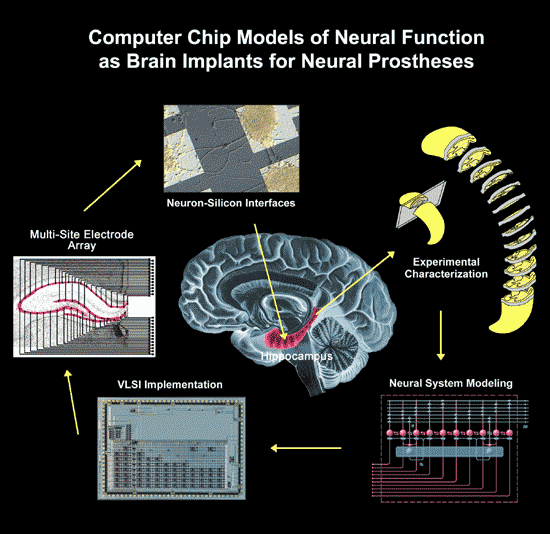
Chips Coming to a Brain Near You

In this era of high-tech memory management, next in line to get that memory upgrade isn't your computer, it's you.

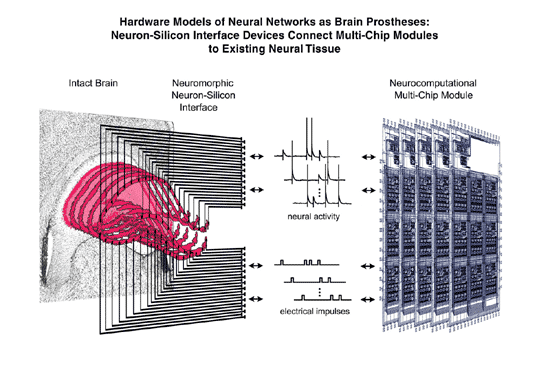
Professor Theodore W. Berger , director of the Center for Neural Engineering at the University of Southern California, is creating a silicon chip implant that mimics the hippocampus, an area of the brain known for creating memories. If successful, the artificial brain prosthesis could replace its biological counterpart, enabling people who suffer from memory disorders to regain the ability to store new memories.

And it's no longer a question of "if" but "when." The six teams involved in the multi-laboratory effort, including USC, the University of Kentucky and Wake Forest University, have been working together on different components of the neural prosthetic for nearly a decade. They will present the results of their efforts at the Society for Neuroscience 's annual meeting in San Diego, which begins Saturday.

While they haven't tested the microchip in live rats yet, their research using slices of rat brain indicates the chip functions with 95 percent accuracy. It's a result that's got the scientific community excited.

"It's a new direction in neural prosthesis," said Howard Eichenbaum , director of the Laboratory of Cognitive Neurobiology at Boston University. "The Berger enterprise is ambitious, aiming to provide a prosthesis for memory. The need is high, because of the prevalence of memory disorder in aging and disease associated with loss of function in the hippocampus."

Forming new long-term memories may involve such tasks as learning to recognize a new face, or remembering a telephone number or directions to a new location. Success depend on the proper functioning of the hippocampus. While this part of the brain doesn't store long-term memories, it re-encodes short-term memory so it can be stored as long-term memory.

It's the area that's often damaged as a result of head trauma, stroke, epilepsy and neurodegenerative disorders such as Alzheimer's disease. Currently, no clinically recognized treatments exist for a damaged hippocampus and the accompanying memory disorders.

Berger's team began its research by studying the re-encoding process performed by neurons in slices of rat hippocampi kept alive in nutrients. By stimulating these neurons with randomly generated computer signals and studying the output patterns, the group determined a set of mathematical functions that transformed any given arbitrary input pattern in the same manner that the biological neurons do. And according to the researchers, that's the key to the whole issue.

"It's an impossible task to figure out what your grandmother looks like and how I would encode that," said Berger. "We all do a lot of different things, so we can't create a table of all the things we can possibly look at and how it's encoded in the hippocampus. What we can do is ask, 'What kind of transformation does the hippocampus perform?'

"If you can figure out how the inputs are transformed, then you do have a prosthesis. Then I could put that into somebody's brain to replace it, and I don't care what they look at -- I've replaced the damaged hippocampus with the electronic one, and it's going to transform inputs into outputs just like the cells of the biological hippocampus."

Dr. John J. Granacki , director of the Advanced Systems Division at USC, has been working on translating these mathematical functions onto a microchip. The resulting chip is meant to simulate the processing of biological neurons in the slice of rat hippocampus: accepting electrical impulses, processing them and then sending on the transformed signals. The researchers say the microchip is doing exactly that, with a stunning 95 percent accuracy rate.

"If you were looking at the output right now, you wouldn't be able to tell the difference between the biological hippocampus and the microchip hippocampus," Berger said. "It looks like it's working."

The team next plans to work with live rats that are moving around and learning, and will study monkeys later. The researchers will investigate drugs or other means that could temporarily deactivate the biological hippocampus, and implant the microchip on the animal's head, with electrodes into its brain.

"We will attempt to adapt the artificial hippocampus to the live animal and then show that the animal's performance -- dependent in these tasks on an intact hippocampus -- will not be compromised when the device is in place and we temporarily interrupt the normal function of the hippocampus," said Sam A. Deadwyler , "thus allowing the neuro-prosthetic device to take over that normal function." Deadwyler, a professor at Wake Forest University, is working on measuring the hippocampal neuron activity in live rats and monkeys.

The team expects it will take two to three years to develop the mathematical models for the hippocampus of a live, active rat and translate them onto a microchip, and seven or eight years for a monkey. They hope to apply this approach to clinical applications within 10 years. If everything goes well, they anticipate seeing an artificial human hippocampus, potentially usable for a variety of clinical disorders, in 15 years.

Overall, experts find the results promising.

"We are nowhere near applicability," said Boston University's Eichenbaum. "But the next decade will prove whether this strategy is truly feasible."

"There is a big gap in making the microchip work in a slice preparation and getting it to work in a human being," added Norbert Fortin, a neuroscientist from the Cognitive Neurobiology Lab at Boston University. "However, their approach is very methodical, and it is not unreasonable to think that in 15 to 20 years such a chip could help, to some degree, a patient who suffered from hippocampal damage."

Research Group, Wired Link


20040822

Remote Sensing Applications

Quantum information science garners a number of advantages in metrology and remote sensing applications. NASA's JPL Quantum Computing Technologies division is actively pursuing research in these areas:

Quantum Lithography
Quantum Gyroscopes
Quantum Clock Synchronization
SQUID- Based Atom Interferometric Gravity Gradiometers

20040309

Quantum Information Science and Technology Project Tokyo, Japan The QUIST/Tokyo team recently visited Korea to visit national quantum information research centers in the region, with focus on recent developments in quantum algorithms. We traveled to the Quantum Information Sciences laboratory at Korea Institute for Advanced Study, led by Dr. Jaewan Kim, and to the School of Mathematical Sciences at Seoul National University, led by principal researcher Dr. Dong Pyo Chi. A public copy of the report is available as ATIP04.004.

20030727

NATO ARW on Quantum Chaos Como, Italy I recently presented on superconducting quantum computing at the NATO/ARO Advanced Research Workshop on Quantum Chaos. "The Workshop was organized to assess the state of the art in an authoritative and unprecedented way - to set the goals of the new frontiers of quantum chaos, the dynamics of complex systems, the feasibility of quantum computing, the development of new photonic devices, and to bring to light the seeds of new perspectives."

20030531

Coding Theory and Quantum Computing Charlottesville, Virginia – I recently attended the NSF Conference and Workshop on Coding Theory and Quantum Computing at University of Virginia. Lectures were given by many of the field's pioneers, including Robert Calderbank, Samuel Lomonaco, Jr., David Meyer, Steven van Enk, and Casper H. van der Wal. Video proceedings from the conference are now online.

20020711

International Conference on High Energy Physics XXXI Amsterdam I recently attended the 31st biannual conference on high-energy physics from 24-31 July 2002 in Amsterdam, The Netherlands. ICHEP continues in the tradition of the Rochester conferences, a long held cornerstone of the international physics community. Highlights included a public lecture by Gerard 't Hooft, Nobel laureate, physics, 1999.

20010530

Quantum Topology

Roman Zapatrin, Quantum topologist
Roman Zapatrin | Starlab 

Roman R. Zapatrin is working on the "Quantum Topology" project. He has recently developed mathematical methods which take away the last pieces of ground under our feet: Einstein took away the predefined metric from spacetime, and Roman Zapatrin – with his physicist colleagues – is taking away spacetime itself.

Another possible application of quantum topological jumps, for which he has provided the theory, is to store information for quantum computers. He graduated from St. Petersburg State University as a pure mathematician. He does not respect any kind of scientific supervision, nor any academic degree; indeed his university diploma was written by himself.

He is an accomplished composer and musician; he plays the balalaika, the domra, the mandola and the mandolon-cello. He enjoys unconventional and ‘uncivilized’ travelling - crossing snow passes in the Alps with a small folding bike, or skiing in the Russian backwoods. He claims just to be providing tools which to wrestle with Nature's challenges.

For several years he worked on quantum logic, and managed to build the theory of automata simulating quantum system; after that he began grappling with the quantization of spacetime. Still, for him, his main achievement is that he is happy with what he is doing. Roman Zapatrin believes that—theoretically at least—we shall be able to change spacetime, so that by a click we may change both the future and the past.

Quantum Topology 

Physical phenomena are supposed to require an arena in which they may occur. That stadium is spacetime. But in the quantum realm is there such an arena—that is to say, does the stadium exist before the game begins? Or does it emerge as we observe it? Can we change spacetime? May we alter the past without time travel?

It is by now generally accepted that, in the quantum realm entities—minuscule particles—somehow come into existence at the instant that they are observed. In the study of quantum topology there may be different scales at which explorations may be conducted, ranging from the very small to the entire universe.

According to the laws of quantum mechanics a basic assumption is made: an assumption of a pre-existing structure. At the very small scale all attempts to observe that assumed structure inevitably change the topology itself; the large amount of energy which has to be applied distorts the arena's very structure.

The topic of quantum topology spawned two projects at Starlab:

Project Aphrodite: Spacetime Foam

The beauteous Aphrodite, she of the wondrous form, took shape and emerged, fully made in her perfection, out of the foam. The notion of spacetime as foam dates from ideas put forward by John Wheeler of Princeton's Institute for Advanced Study during the 1960's. The Aphrodite project aims to dive deep into the broth of geometrical fluctuations and give perfect shape to that which was formless.

This project explores the structure of spacetime at the Planckian scale. The Planck length is the smallest naturally occurring measurement used by scientists: about a billionth of a billionth of a billionth of a millionth of a centimetre. It is at this scale those quantum phenomena and the arena—or the topology in which they occur—emerge as they are observed.

The task here is to provide a mathematical solution to this physical problem. There is no desire to give up Einsteinian relativity; it presents a very good working model, in its domain of application. But at the sub-Planckian scale, Einstein's theory cannot even be tested. Because it is not testable, the notion of pre-existing spacetime is swept away and may be replaced by an appropriate quantum observable–an entity whose values at the moment it is measured.

Then care is taken to make this work compatible with existing working theories such as relativity, so that the beautiful Aphrodite may be safe wherever she roams.

Project Undo: Topology Leaps

Undo follows from the claims of quantum topology. `Undo' involves the changing of spacetime.
Say for instance that an explosion has occurred; in principle it is possible that by observation itself the arena that is spacetime may be so altered that the explosion did not occur. In this sense it has been undone.

This is a quasi undoing or altering, which occurs as a result of appropriate measurement. This would not be possible without quantum effects, and the goal of this project is to find appropriate measurements of spacetime, which involve those effects. Quantum measurements are those which unavoidably effect that which is being measured. The point about this process is that it is the act of measurement itself, which creates the stadium, and further measurements may create altered or different stadia. This is not the same as travelling back in time; what takes place is an alteration so that a previous setting is undone, in the sense that it did not exist.

Einstein claimed that the past and the future are in a given, predefined or frozen spacetime. The Undo project melts it.

20010505

US National Labs Salishan Fellowship


Salishan | Algorithms, Architecture, Language

LANL | LLNL | LBNL | SNL
Los Alamos | Lawrence Livermore | Lawrence Berkeley | Sandia

Christopher Altman  Research foci include high-performance computing (HTMT), solid-state superconducting nanoelectronics, macroscopic quantum coherence and computation, quantum infomation processing in Josephson junction nanocircuits.

I was honored to participate in the US National Labs Conference on High-Speed Computing from April 23-27, 2001 at Westin Salishan in Gleneden Beach, Oregon. Salishan is a half-mile's walk from the beach, a picturesque, mist-covered mountain resort that has been the setting for the conference since its inception.

The conference, founded in 1980, was founded as a means of getting experts in computer architecture, languages, and algorithms together to improve communications, develop collaborations, solve problems of mutual interest, and provide effective leadership in the field of high speed computing. Attendance is by invitation only, and limited to about 170 of the best and brightest in the world.

The conference is sponsored by Lawrence Livermore, Los Alamos, and Sandia National Laboratories, as well as being co-sponsored by a number private companies—this year volunteering sponsors included Compaq, Cray Inc., Fujitsu, IBM, Intel, SAIC, SGI, StorageTek, and Sun Microsystems.

A highlight of the conference was the informal discussions held each evening in Salishan's Sunset Suite, a forum to exchange ideas, solve problems, and develop friendships. This year's talks profiled recent developments in nanotechnology, supercomputing, microelectromechanical systems, large-scale networks, memory architectures, data management, artificial intelligence, molecular electronics, and a number of other technologies that will significantly impact the future of information science and technology.

The meeting was a stimulating and challenging week of close interaction with many of the most creative minds in the field. I'd like to extend my gratitude to the many inspiring scientists with whom I had the opportunity to meet at Salishan—and to those who helped to make my attendance possible, including Fernand “Doc” Bedard, Horst Simon, David Kahaner, Brett Berlin, Will Stackhouse, Jim McGraw, Kathy Turnbeaugh, Dennis Bohnenkamp, and Lala Stone.

It was an honor to attend under support of a Salishan fellowship, to meet and discuss large-scale networks with H. Shrikumar and paintable computers with Bill Butera. I look forward to meeting both again on my next trip to the Media Lab.

Special thanks go to Horst Simon for our continuing discussions on high-performance computing and the HTMT architecture, and to Doc Bedard for his guidance, advice, and for answering my questions while exploring ideas on imaginative walks through the forested grounds of Salishan. My interest in Josephson Junction RSFQ superconducting nanoelectronics has been in no small part due to Bedard's Random Access talk, and the influence of our continued discussions throughout the week.

Notwithstanding revolutionary hardware breakthroughs, the next generation of high-performance computing systems will continue to be reliant upon low-temperature superconducting nanoelectronics. Moore's Law ensures their dimensions will shrink rapidly. As we enter the era of quantum information processing, this is certain to be a productive and exciting area of research.


Proceedings

Application Requirements and Current System Architectures

An Overview of Nuclear Stockpile Stewardship
James Mercer-Smith, Los Alamos National Laboratory

Requirements for Large-Scale Massively Parallel Computing
Robert Weaver, Los Alamos National Laboratory

Sandia C-Plant Clusters
Art Hale, Sandia National Laboratories

LLNL ASCI Platforms
Mark Seager, Lawrence Livermore National Laboratory

Future System Architectures

HEC Architectures in the 21st Century: Drivers and Imperatives
Thomas Sterling, Caltech

High Performance and High Density Archives
Jim Hughes, StorageTek

Future Communications and Networking
Marc Beackon, Lucent Technologies

From Problem Definition to Problem Setup

An Introduction to the Challenges of Problem Setup
Robert Leland, Sandia National Labs

Responses to Analysis / CAD Integration Perplexities
Ted Blacker, Fluent, Inc.

Computational Problem Setup: An Industrial Perspective
Todd Michal, Boeing

Unstructured Meshing
Glen Hanson, Los Alamos National Laboratory

A Heirarchical Data Management System for Parallel Partitioning of Adaptive Communication
Joe Flaherty, Renssalaer Polytechnic University

CAD to Results: The Snowball Effect
David White, Cargegie-Mellon University

From Problem Setup to Result Data

Performance Metrics: Out of the Dark Ages
David Bailey, Lawrence Berkeley National Laboratory

State of the Art in Programming Tools
John Levesque, Times N Systems

Addressing the Memory Bottleneck
Sally McKee, University of Utah

Random Access Talks

NASA's digital library initiative
Eugene Miya, NASA Ames Research Center

Evolutionary Hardware
de Garis, Starlab NV/SA

OSCAR and the Open Cluster Group

ASCI Setup
Sandia National Laboratory

Self-adapting software
Jim Hughes, INFOSEC

Josephson Junction RSFQ Superconducting nanoelectronics
Fernand Bedard, National Security Agency

ATIP Activities in East Asia
David Kahaner, Asian Technology Information Program

Alan Huang, Stanford University

Norm Whittaker

From Result Data to Insight

Is Visualization a Solved Problem?
Sam Uselton, Lawrence Livermore National Laboratory

Large Scale Scientific Data Management and Analysis
Alok Choudhary, Northwestern University

Can Data Mining Ever be a Gigabit Application? Lessons from DataSpace
Robert Grossmsan, University of Illinois, Chicago

Schooling in the Digital Age
Sara Armstrong, PhD, George Lucas Educational Foundation


MEMS: Micro-Electrical Mechanical Systems


A Smaller Hammer
William S. Trimmer, Standard MEMS Inc.

MEMS Modeling: Pushing the Limits of Miniaturization
Robert Rudd, Lawrence Livermore National Laboratory

Artificial Brains and Self-Configuring Electronics

Artificial Brains: Today and Tomorrow
de Garis, Starlab NV/SA

Gate Array, Configure Thyself
Nick Macias, Cell Matrix Corp

An Approach to Designing Extremely Large, Extremely Parallel Systems
Lisa Durbeck, Cell Matrix Corp

Molecular Computing and Myriad Nets

Defect Tolerant Molecular Electronics Algorithms, Architectures, and Atoms
Philip Kuekes, Hewlett-Packard Laboratories

Myriad Nets: De-Layering to Scale Networks up to the Billions
H. Shrikumar, MIT Media Laboratory

Future Directions

Programming a Paintable Computer
Bill Butera, MIT Media Laboratory

The Future of High Performance Computing: Dynamic Translation and High Density Computing
Dave Taylor, Transmeta Corporation